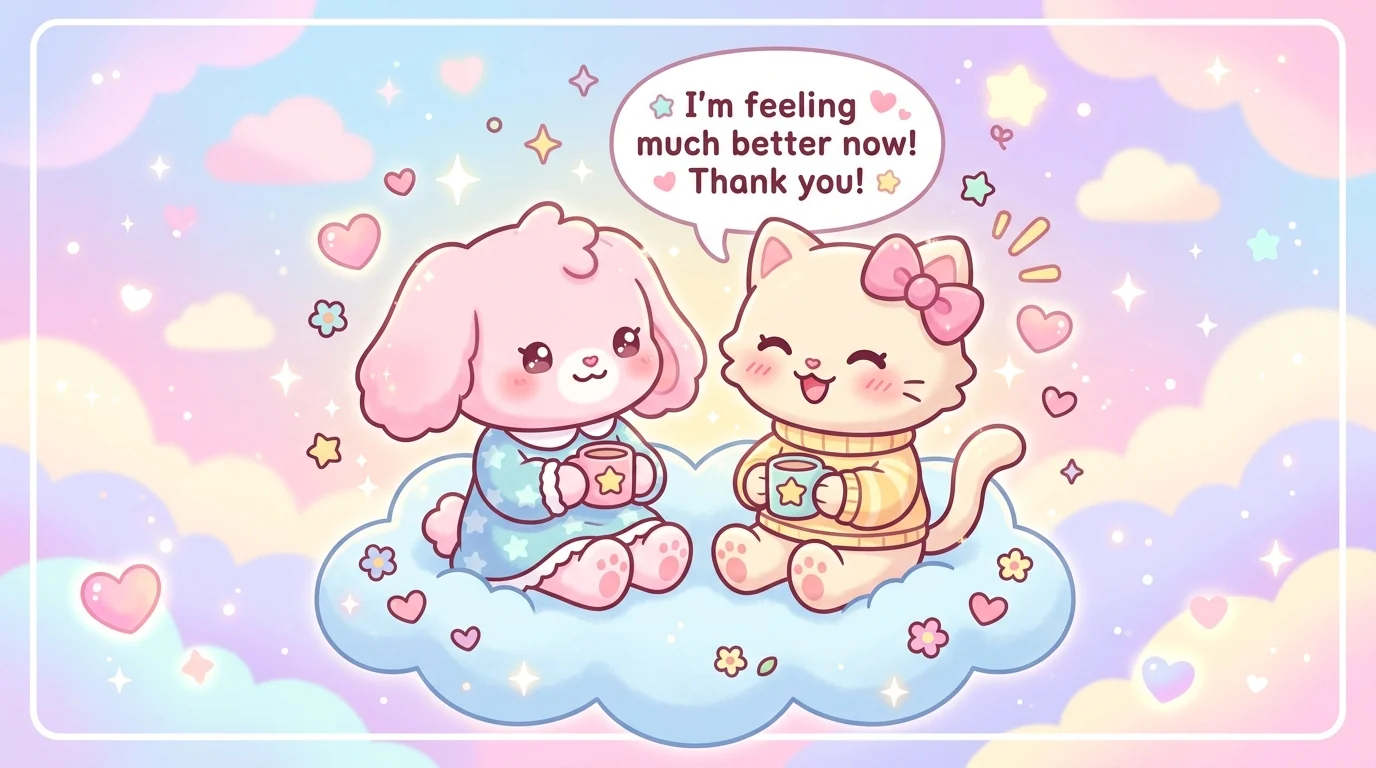
When someone says, “I’m feeling better now,” it usually means they are recovering from a difficult day, illness, stress, or simply a rough moment. A thoughtful reply can show that you genuinely care without making the conversation feel too serious.
The best response depends on your relationship with the person and the situation. You can be caring, supportive, cheerful, funny, or simply relieved that they are doing better. Here are some natural replies to “I’m feeling better now” for almost any conversation.
• Glad to Hear That
Best for: Showing genuine happiness about their improvement.
Alternative: “That’s really good to hear.”
Examples:
“I’m really glad you’re feeling better now.”
“That’s great news. I was hoping you’d feel better soon.”
A simple and sincere response is often the best choice when someone has been having a difficult time.
• That’s Good to Hear
Best for: Casual and friendly conversations.
Alternative: “I’m happy to hear that.”
Examples:
“That’s good to hear. Take care of yourself.”
“Good to hear you’re doing better.”
This response feels natural without sounding overly emotional.
• I’m So Happy for You
Best for: Close friends, family, or someone you care about.
Alternative: “I’m genuinely happy you’re doing better.”
Examples:
“I’m so happy for you. You deserve to feel good again.”
“That makes me really happy to hear.”
It adds a warmer and more personal touch to the conversation.
• Finally, Some Good News
Best for: When they have been struggling for a while.
Alternative: “Finally, things are looking up.”
Examples:
“Finally, some good news. I’m glad you’re better.”
“That’s the kind of update I wanted to hear.”
This reply adds a little enthusiasm while showing that you care.
• Take It Easy
Best for: Someone recovering from sickness, stress, or exhaustion.
Alternative: “Don’t push yourself too hard.”
Examples:
“Glad you’re better. Now take it easy.”
“That’s great, but make sure you still get plenty of rest.”
It reminds them that feeling better does not always mean they should immediately overdo things.
• Keep Taking Care of Yourself
Best for: A thoughtful and supportive response.
Alternative: “Keep looking after yourself.”
Examples:
“I’m glad you’re feeling better. Keep taking care of yourself.”
“That’s wonderful. Just keep resting and taking care of yourself.”
This response works especially well when someone has recently been unwell.
• That’s a Relief
Best for: When you were genuinely worried about them.
Alternative: “I’m relieved to hear that.”
Examples:
“That’s such a relief. I was worried about you.”
“I’m really glad to hear that. What a relief.”
It communicates that their improvement matters to you.
• You Had Me Worried
Best for: Close friends or family members.
Alternative: “I was starting to worry about you.”
Examples:
“You had me worried there. I’m glad you’re better.”
“Honestly, you had me concerned. Good to hear you’re okay.”
This works when you want to be caring while keeping the conversation personal.
• Look at You Getting Better
Best for: Playful encouragement.
Alternative: “Look who’s back in action.”
Examples:
“Look at you getting better already.”
“Look who’s finally feeling like themselves again.”
This adds a cheerful and playful tone to your reply.
• That’s What I Like to Hear
Best for: Friendly and upbeat conversations.
Alternative: “Now that’s good news.”
Examples:
“That’s what I like to hear. Keep it up.”
“Now that’s the kind of update I was waiting for.”
It sounds positive without being too formal.
• I Knew You’d Bounce Back
Best for: Encouraging someone with a strong personality.
Alternative: “I knew you’d get through it.”
Examples:
“I knew you’d bounce back.”
“I had a feeling you’d be back on your feet soon.”
This response gives them a little confidence and encouragement.
• Welcome Back to the Land of the Living
Best for: Close friends who enjoy humor.
Alternative: “Welcome back to civilization.”
Examples:
“Feeling better? Welcome back to the land of the living.”
“Glad you survived. Civilization missed you.”
This is a funny option when the situation is not too serious.
• That’s a Win
Best for: Casual, upbeat conversations.
Alternative: “I’ll take that as a win.”
Examples:
“You’re feeling better? That’s a win.”
“Feeling better already? Definitely a win.”
It keeps the conversation light and positive.
• Proud of You
Best for: Someone who has been dealing with something difficult.
Alternative: “You’re doing great.”
Examples:
“I’m glad you’re feeling better. Proud of you.”
“You’ve been through a lot, so I’m really happy to hear this.”
This can be especially meaningful when they have had a challenging period.
• Keep That Energy Going
Best for: Someone who is recovering and feeling positive.
Alternative: “Keep that good energy going.”
Examples:
“Feeling better? Keep that energy going.”
“That’s great. Keep moving in the right direction.”
It gives the conversation an encouraging and optimistic vibe.
• Don’t Forget to Rest
Best for: Someone who feels better but may still be recovering.
Alternative: “Give yourself time to recover.”
Examples:
“I’m glad you’re better, but don’t forget to rest.”
“Good to hear. Just remember to take things slowly.”
This is caring without sounding overly serious.
• You Sound Better Already
Best for: Texting or talking with someone who sounds happier.
Alternative: “You already sound more like yourself.”
Examples:
“You sound better already.”
“I can tell you’re feeling more like yourself.”
It is a subtle way of showing that you have noticed their improvement.
• That Made My Day
Best for: Someone close to you.
Alternative: “That’s the best thing I’ve heard today.”
Examples:
“Hearing that you’re better honestly made my day.”
“That’s such a nice update. You just made my day.”
This reply shows genuine emotional warmth.
• I’m Glad You’re Okay
Best for: Someone who has been through a stressful or difficult situation.
Alternative: “I’m just glad you’re okay.”
Examples:
“I’m glad you’re okay. That’s what matters most.”
“Honestly, I’m just happy you’re doing better.”
It focuses on their well-being rather than the details of what happened.
• Now I Can Stop Worrying
Best for: Someone you care about deeply.
Alternative: “Okay, now I can breathe.”
Examples:
“You’re feeling better? Good. Now I can stop worrying.”
“That’s a relief. I can finally relax a little.”
This gives your response a personal and caring feel.
• Better Is Better
Best for: Lighthearted conversations.
Alternative: “Hey, improvement is improvement.”
Examples:
“Feeling better? Better is better.”
“Even a little better is still a win.”
It is short, casual, and encouraging.
• Keep Going
Best for: Motivating someone who is recovering.
Alternative: “One step at a time.”
Examples:
“Glad you’re feeling better. Keep going.”
“That’s progress. Just keep taking it one day at a time.”
This works well when their recovery is still ongoing.
• I’m Rooting for You
Best for: Supportive conversations.
Alternative: “I’m always cheering you on.”
Examples:
“I’m glad you’re feeling better. I’m still rooting for you.”
“Keep going. You’ve got me cheering for you.”
It communicates support without putting pressure on them.
• That’s a Big Improvement
Best for: When they have noticeably recovered.
Alternative: “Sounds like you’re making progress.”
Examples:
“That’s a big improvement. I’m happy for you.”
“Sounds like you’re doing much better now.”
This response acknowledges their progress in a positive way.
• Time for a Little Celebration
Best for: Playful conversations after a difficult period.
Alternative: “Looks like we have something to celebrate.”
Examples:
“You’re feeling better? Time for a little celebration.”
“That calls for at least a tiny victory dance.”
It brings some fun energy into an otherwise serious conversation.
• Good, Because I Missed You
Best for: Close friends, partners, or loved ones.
Alternative: “I’m glad you’re back to yourself. I missed you.”
Examples:
“Good, because I missed having you around.”
“I’m glad you’re feeling better. Things weren’t the same without you.”
This makes the response affectionate and personal.
• That’s Wonderful
Best for: Polite, warm, and universally appropriate conversations.
Alternative: “That’s really wonderful to hear.”
Examples:
“That’s wonderful. I’m happy for you.”
“That’s really good news. I’m glad you’re feeling better.”
It is simple enough for almost any situation.
• You Deserve to Feel Better
Best for: Someone who has been going through a difficult period.
Alternative: “You deserve some good days.”
Examples:
“I’m glad you’re feeling better. You really deserve it.”
“After everything you’ve dealt with, you deserve to feel good again.”
This response offers emotional support and reassurance.
• Keep Smiling
Best for: Cheerful and positive conversations.
Alternative: “Keep that smile going.”
Examples:
“Glad you’re feeling better. Keep smiling.”
“That’s good news. Keep that positive energy.”
It keeps the conversation bright and optimistic.
• You’re Back
Best for: Friends who are finally returning to their normal personality.
Alternative: “There you are.”
Examples:
“You’re feeling better? You’re back!”
“There you are. I was wondering when you’d return.”
This is especially fun when someone has been unusually quiet or tired.
• Seriously, I’m Glad
Best for: A heartfelt response.
Alternative: “Honestly, that makes me really happy.”
Examples:
“Seriously, I’m glad you’re feeling better.”
“I mean it, I’m really happy things are improving for you.”
This makes your support sound sincere and genuine.
• Keep Getting Better
Best for: Someone who is still recovering.
Alternative: “Hope you continue feeling better.”
Examples:
“I’m glad you’re feeling better. Keep getting stronger.”
“Happy to hear that. Hope tomorrow is even better.”
It ends the conversation on an encouraging note.
FAQs
What is the best reply to “I’m feeling better now”?
A warm response like “I’m really glad to hear that” is one of the best choices because it shows genuine care and happiness.
How do I reply when a friend says they feel better?
You can say, “That’s great to hear! I was worried about you. Take it easy and keep resting.”
What is a short reply to “I’m feeling better now”?
Try “Glad to hear it!” or “That’s great news!” for a simple and natural response.
How can I reply in a funny way?
You could say, “Welcome back to the land of the living” or “Look who’s back in action!”
How do I sound caring without being too serious?
Use something simple like, “I’m really happy you’re doing better. Just take care of yourself.”
Conclusion
When someone says, “I’m feeling better now,” a thoughtful reply can make them feel supported and appreciated. Whether you choose a caring message, an encouraging response, or a playful joke, the most important thing is to match your reply to the situation.
Simple words like “I’m glad to hear that” can mean a lot. If you know the person well, you can make your response warmer or funnier to keep the conversation natural and personal.

I’m Dustin Michael, an administrator passionate about creating helpful, engaging, and reliable content. I manage ReplyBuz with care, ensuring readers find useful replies, ideas, and inspiration.